
Looking Up South Pasadena Neighbors
A block lookup combines land geometry, authorized owner information, public project records, selected historical listings, and community programs. It does not create a current neighbor directory. The Assessor map shows parcels and AINs. The owner channel may show an assessed owner. Reverse directories can show past listed occupants. Neighborhood Watch connects a block to police without publishing its participant list.
| Source | What it shows about a block | Access |
|---|---|---|
| Assessor parcel map | Boundaries, adjoining lots, AINs, situs | Free map and address search |
| Assessor owner channel | Assessed owner for a resolved AIN | District, help desk, or data route |
| City permits | Project activity, applicant, contractor, address event | OpenGov or city request |
| Reverse directory | Listed occupants at sequential historic numbers | Library reference or digitized volume |
| Neighborhood Watch | Organized block contact with police | Training and block-captain process |
| Voter file | Restricted registration fields for approved purposes | Self-lookup or qualified request |
These sources describe a block in layers. The safest result says what the map, owner channel, permit, or community program actually shows and stops there.
Find South Pasadena Neighbor Parcels
Adjacency is a parcel question. Search a known address in the Los Angeles County Assessor Portal, open the map, and note every polygon that shares a boundary or directly faces the subject parcel. Click each polygon and save its AIN and situs separately. A radius is not the same as adjacency, and a postal address can cover several units on one parcel.
- Locate the subject address and preserve its AIN, legal description, and map position.
- Zoom until parcel lines are clear, then identify the lots sharing a boundary or facing the subject.
- Record one AIN and situs address per parcel rather than merging a block into one result.
- Use the permitted Assessor owner channel for each AIN, then choose city, library, or recorder records as needed.
- For a whole named street, switch to the South Pasadena street directory workflow.
The process identifies land next to land. It does not prove that a listed owner, a historical occupant, or a household member is a current neighbor.
Map South Pasadena Neighbor AINs
The Assessor map has address or AIN search, Basic Search, Legal Search, Map Search, zoom, pan, and parcel selection controls. It is the appropriate local parcel viewer for an incorporated South Pasadena block. Los Angeles County Planning's GIS-NET description includes tools such as identify, query, buffer, measure, export, and print, but the official description serves unincorporated areas. Do not promise that tool as the city's authoritative block map.
- AIN
- The county parcel identifier used to keep one lot distinct from another.
- Adjacent parcel
- A mapped lot sharing a boundary with the subject, not every place within a chosen radius.
- Situs
- The physical address of the parcel or improvement.
- Mailing address
- A correspondence destination that can be different from the situs.
The Los Angeles County Assessor Map is the map source captured for South Pasadena neighbors research. Keep the map's land purpose clear when comparing it with a court or community record.
South Pasadena Neighbor Owners and Occupants
A block can hold an owner mailing address, a situs address, a directory occupant, a permit applicant, and several units. Those fields can all be correct while describing different people. Use the Assessor's controlled owner channel for an AIN, then label the result as assessed ownership. Use the library's reverse volumes for a selected historical occupant. Use city permits for a project participant.
| Official roll | Commercial neighbor tool | Safer reading |
|---|---|---|
| Parcel and legal record from the custodian | Compiled or matched names | Verify the name with the custodian |
| Defined address, AIN, date, and instrument fields | May merge similar people or old addresses | Keep source date and record type |
| Controlled owner, voter, or court channel | May offer a paid report or contact feature | Do not treat a result as a live household fact |
The distinction matters when neighbors research starts with a safety or family-history question. A parcel can locate a place without disclosing the people who use it.
South Pasadena Neighbor Watch Has No Roster
South Pasadena Police's Neighborhood Watch page is the official community layer for a block. SPPD offers free training and a block-captain application and handbook. Detective Richard Lee is listed at (626) 403-7285 and rlee@southpasadenaca.gov. The program helps residents organize contact with police, but it does not publish a participant or member directory.
Business Watch is also maintained through a police contact form rather than a public list of business owners. That boundary protects a community program from becoming an address index. A person who wants to join or start a block effort should use the police program directly, not infer a neighbor list from parcel records.
The South Pasadena Neighborhood Watch page is the correct public route.
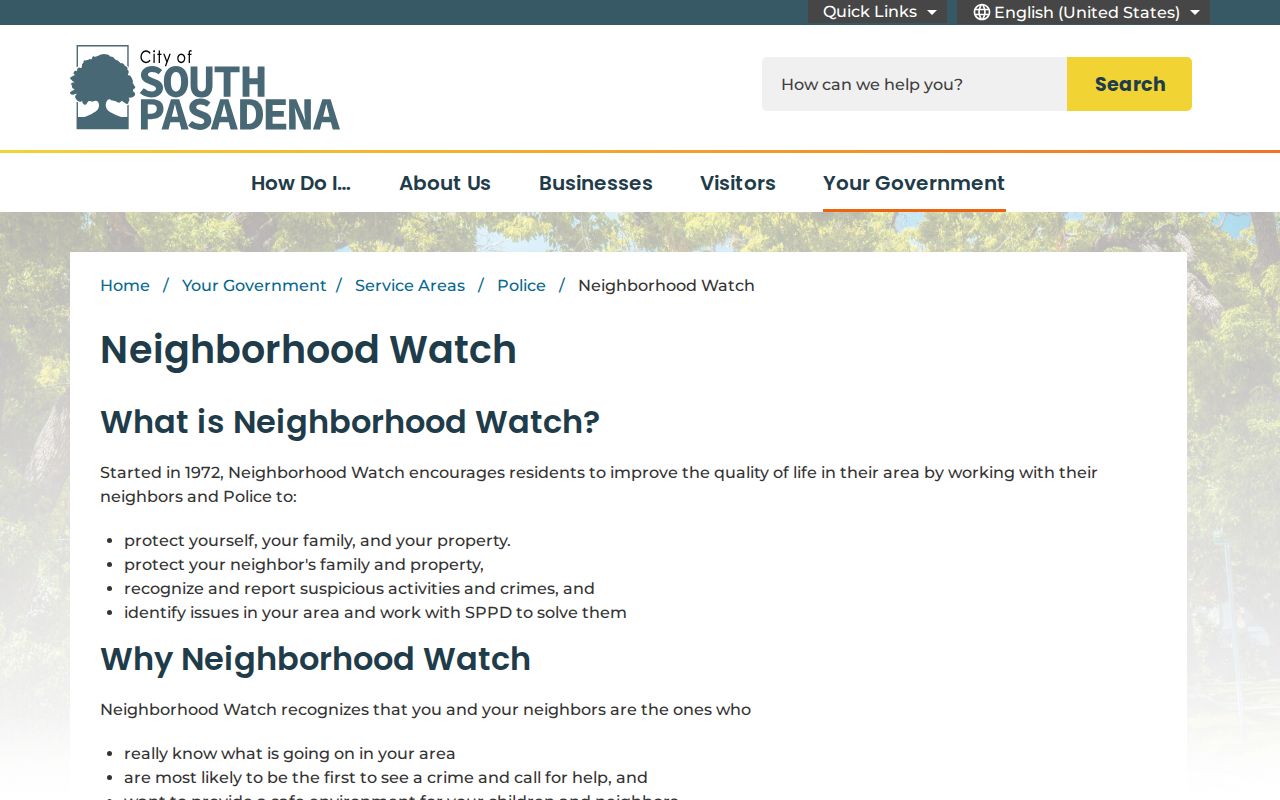
The program connects a block to a public-safety channel without publishing private participant identities.
| Neighborhood Watch | Free training, block-captain application, and police contact. |
|---|---|
| Business Watch | Emergency-contact form kept in a police file, not a public owner roster. |
| Neighborhood associations | No authoritative current South Pasadena membership directory was verified. |
South Pasadena Neighbor Voter Limits
California My Voter Status authenticates the voter who is checking their own registration. It does not allow a public name or street browse. A voter-file request is limited to approved election, scholarly, journalistic, political, governmental, or reviewed record-audit purposes. The file can carry residence, mailing, precinct, status, party, registration, and participation fields for qualified access, but it is not a casual block directory.
Elections Code sections 2188, 2188.5, and 2194 restrict access and use. Safe at Home participants and qualifying confidential voters receive added protection. A missing voter record does not show that a neighbor is absent, and a public record does not authorize direct contact.
The California voter access rules explain the approved-purpose boundary.
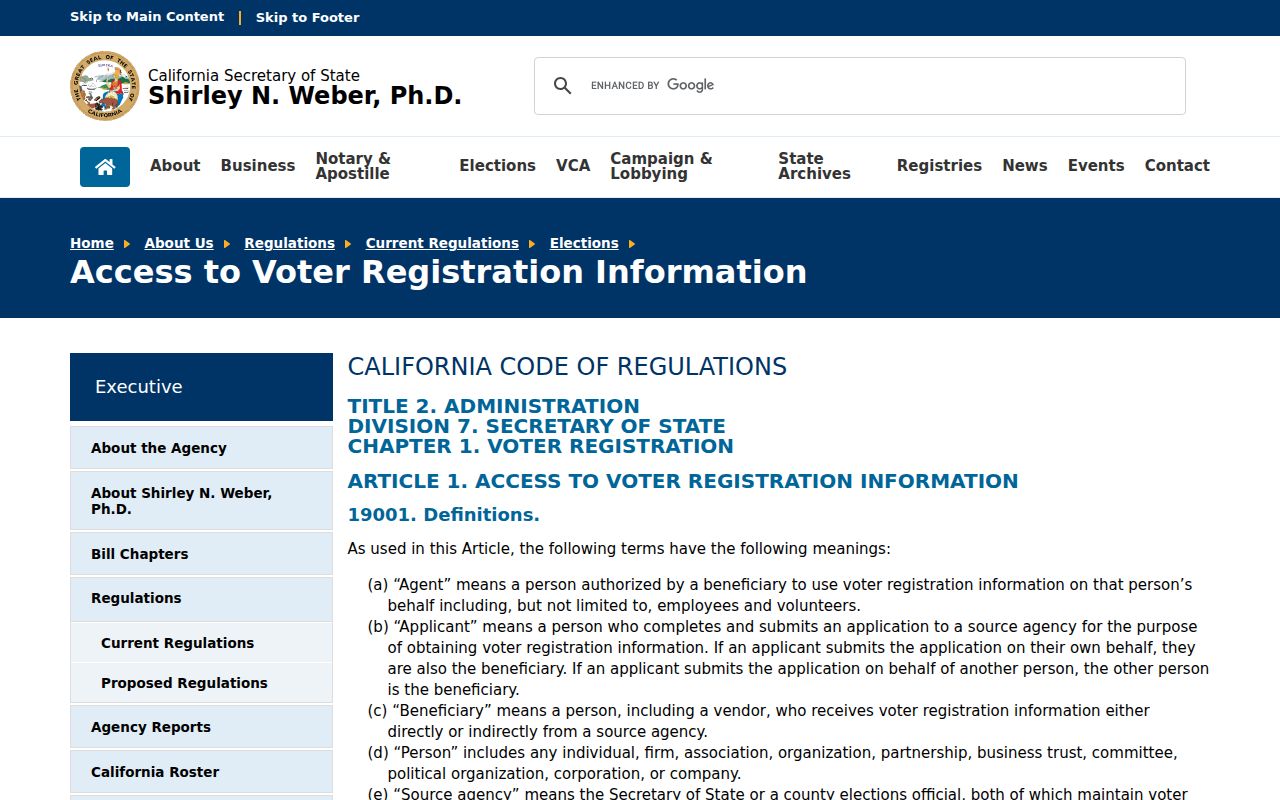
The rule keeps voter data in a civic process. Parcel research and community contact should not be used to recreate a voter list.
Public South Pasadena Neighbor Records
A block can have public records that name a business, facility, agency, or event without naming every neighbor. Los Angeles County's environmental health search can show restaurant facilities, addresses, and public inspection records. Those records describe a public-facing operation at a place. They do not identify every owner, worker, patron, or nearby household.
Federal court jurisdiction is another example of a public place clue. South Pasadena lies in the Central District of California for federal cases, and PACER is the case gateway. A court location can distinguish a case record, but it does not map the surrounding block. Keep the record's purpose beside the address.
The Los Angeles County restaurant records search is the source for facility and inspection information.
A public facility record can add a dated block clue without becoming a people list.
The Central District of California supplies federal court jurisdiction context for South Pasadena.
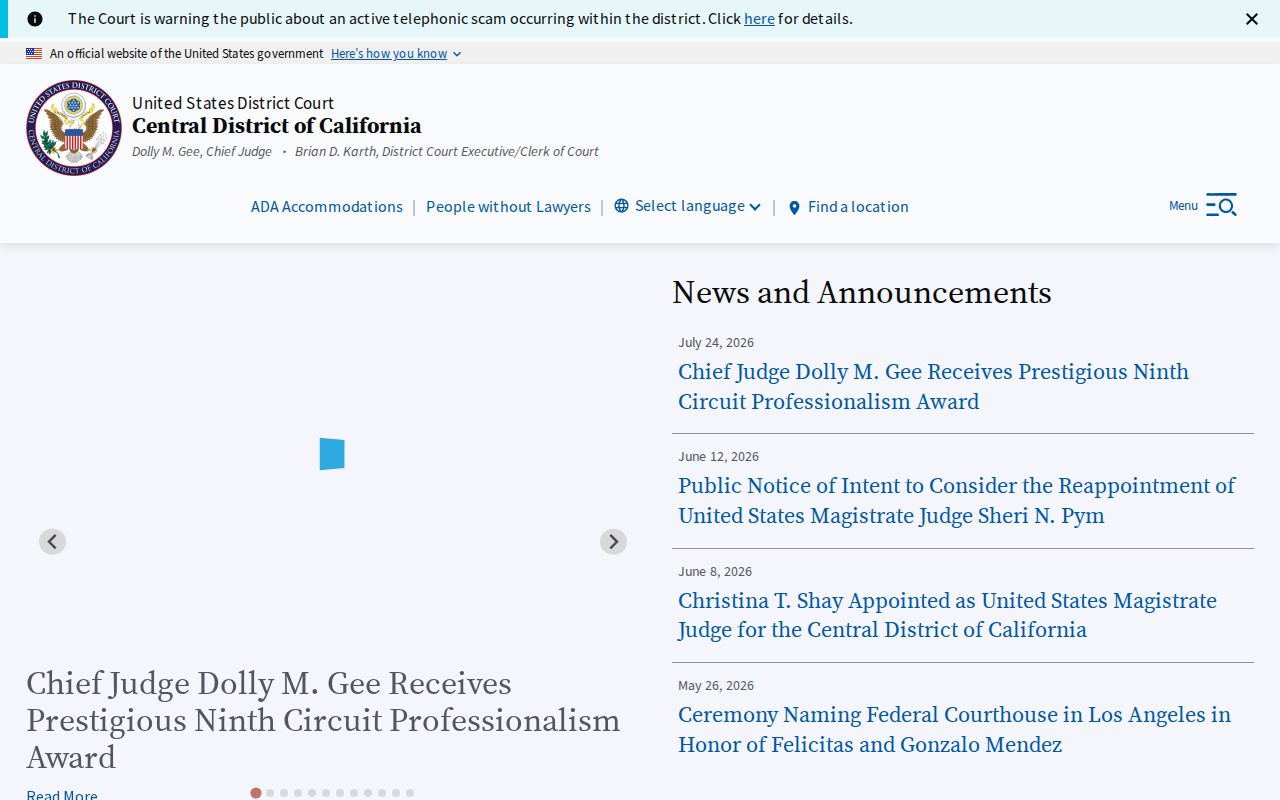
The federal court source is a jurisdiction clue, not a map of the surrounding households.
Use public-facing records for their stated purpose. Do not infer private household facts from them.
Other public clues can come from a city permit, a historic-resource inventory, a court filing, or a business record. Each has a narrow reason for existing. A permit may name an applicant or contractor, a historic inventory may name a style or district, and a court file may identify a party and date. None of those fields supplies a roster of South Pasadena neighbors. Label the clue before comparing it with a parcel.
South Pasadena Neighbor GIS Geography
GIS-NET is county-branded and advertises powerful layers, queries, buffers, measures, exports, and prints. Its official description says it serves unincorporated Los Angeles County, while South Pasadena is incorporated. That geography quirk can make a tool look more complete than it is for a city block. Use the Assessor Map, city planning maps, and the parcel AIN instead.
The same geography check applies to permits, voter records, schools, police areas, and ZIP codes. A county service can cover South Pasadena for one record type and not another. A postal code can label an edge address while a city department holds the permit. Confirm the custodian before asking for a block record.
The Assessor map help is the better local reference for AIN and parcel navigation.
What South Pasadena Neighbors Cannot Be Shown
Parcel maps and owner channels do not show renters, household members, utility customers, delivery recipients, children, or protected participants. California's Safe at Home program provides a substitute mailing address and confidentiality for qualifying survivors and other protected people. DMV data is restricted. Court, vital, adoption, juvenile, and voter records have their own access limits. No block method should work around those protections.
When a result looks wrong, contact the custodian with the AIN, address, date, and record type. Do not publish a private address while asking for correction. For a scam or identity-theft concern, use the county or state reporting channel. The FTC's report portal can take a fraud report, while the county's homeowner notification program can alert a current owner to specified filings.
Lawful use. South Pasadena neighbors research is for personal, lawful block awareness, family history, civic understanding, and record correction. Never use a parcel, name, or public clue to stalk, harass, threaten, intimidate, or harm anyone.
The FTC fraud reporting portal is a reporting route, not a neighbor lookup.
A safe block search ends with the record's lawful purpose and the person's privacy.